Fast answers for patients, and the care team stays in the loop.
Designing a trustworthy AI assistant for patients 50+ in the mymobility app, from framework to launch.
I led UX design for an AI messaging assistant in the mymobility app that answers routine recovery questions, hands off to the care team when it can’t help, and keeps every conversation visible to clinicians.
I authored the Conversational Design Framework and prototyped the assistant’s voice, visuals and workflows in Figma, prioritizing transparency and accessibility for patients 50+. Across four test sessions with our patient panel, user sentiment rose 10 points.
Problem
After joint replacement surgery, patients have routine questions at all hours. Care teams spend time answering the same recovery questions, which adds to inbox volume and burnout.
The opportunity was an assistant that could handle the simple questions and flag the rest. In a regulated clinical setting, the challenge was making it trustworthy for patients 50+, many of them new to AI, without adding risk or work for clinicians.
Principles
Four principles guided the design decisions throughout.
- Contextual, not transactional. It should feel like part of the patient’s care, not a generic chatbot.
- Answer only from approved content. It responds only with provider-approved educational content, and escalates when it has no approved answer.
- Earn trust with patients 50+. Tone, visuals and clear handoffs matter as much as accuracy.
- Fit the clinical workflow. Resolved questions shouldn’t create alerts, and unresolved ones should reach the right person with context.
System
I designed the assistant as one system with two sides: what patients see, and the controls care teams rely on.
For patients
Four parts of the experience built trust from the first message.
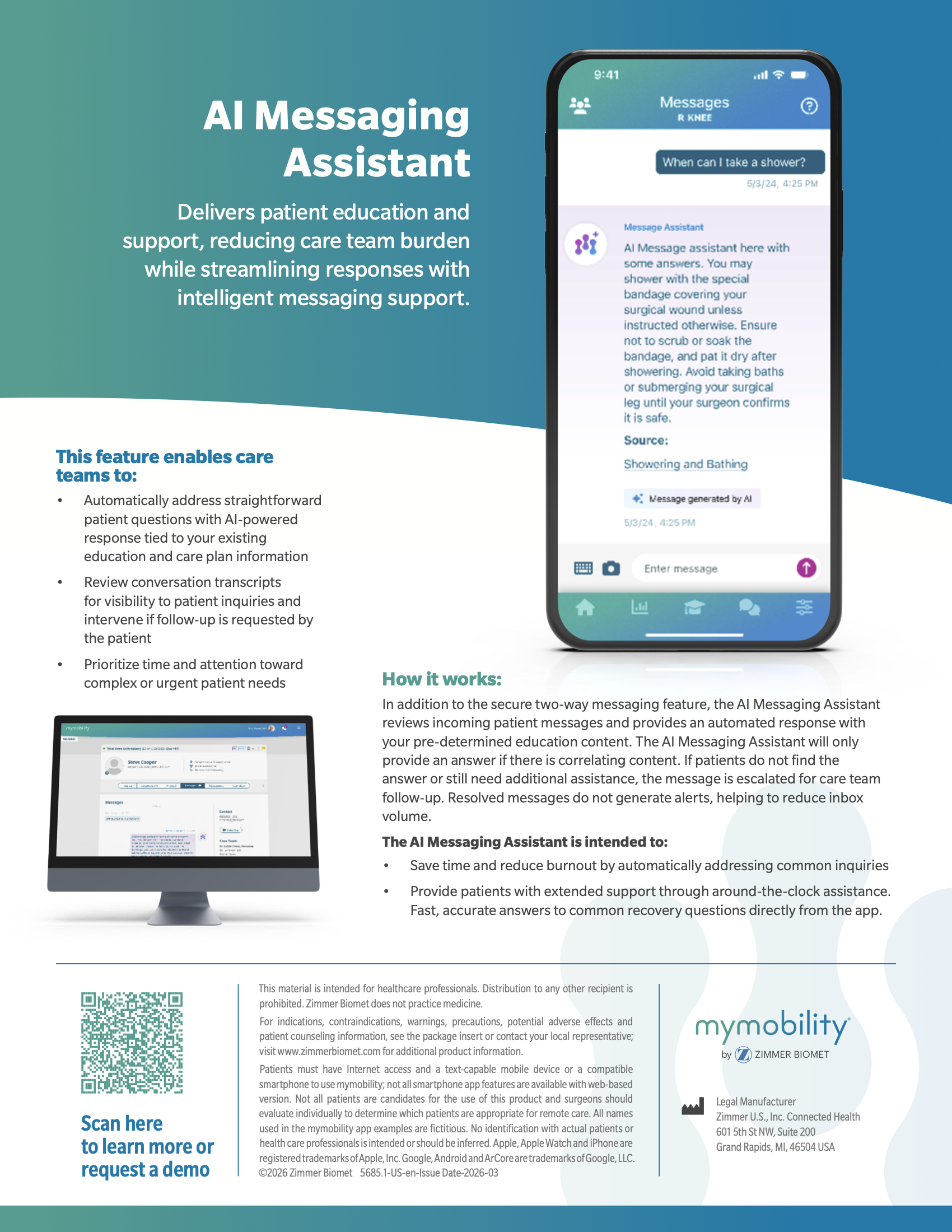
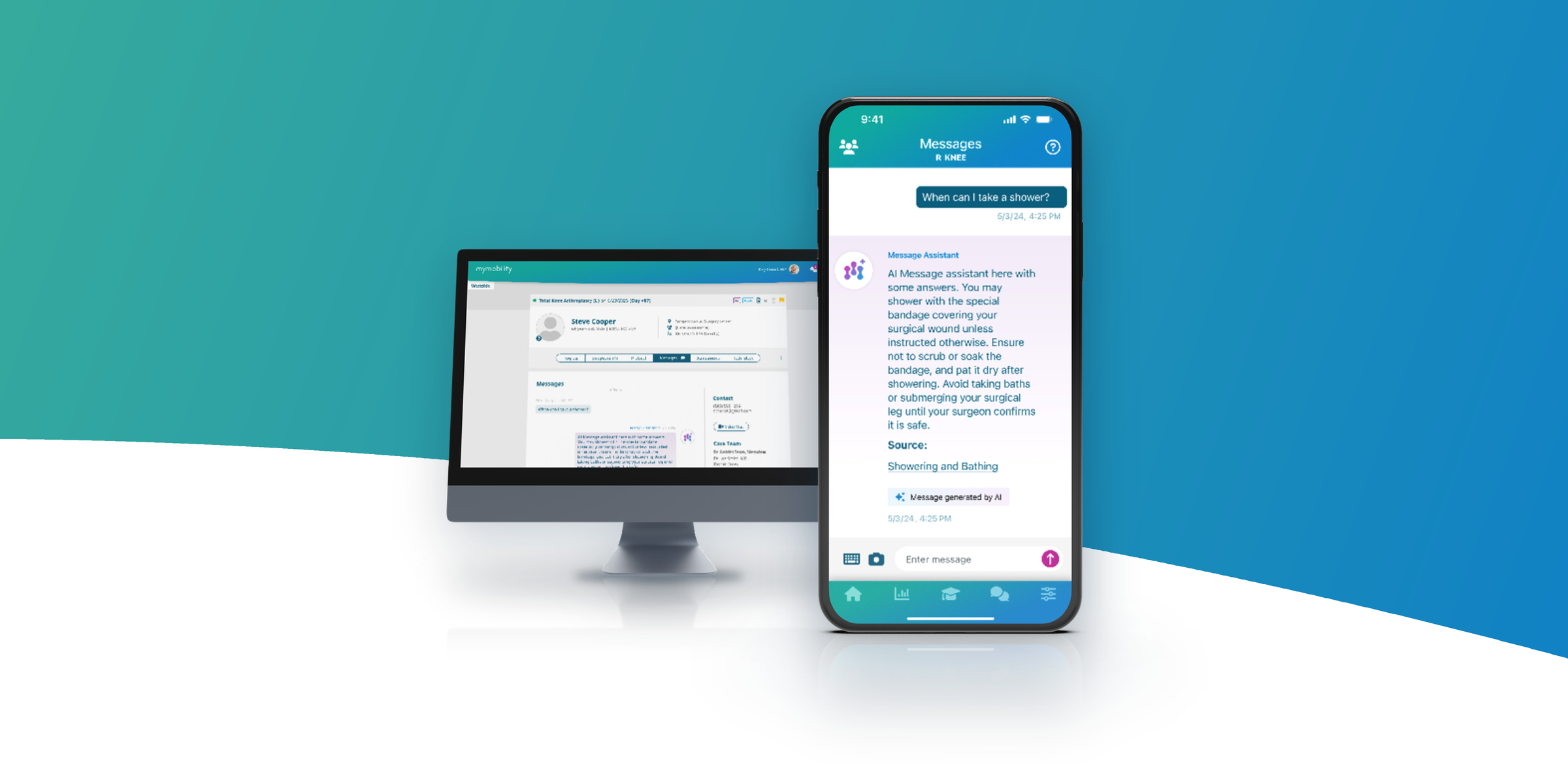
- Setting expectations. The assistant opens by explaining what it can and can’t help with and is clearly labeled as an AI, so patients know what they’re talking to before they ask anything.
- The conversation. I authored the Conversational Design Framework in Confluence for the AI engineers: conversation trees, response frameworks, and the assistant’s character and branding language. I prototyped the voice, avatar and interaction model in Figma, where the visuals were always tested. The framework began under my ownership, was shared with the team, and was eventually handed off.
- Knowing its limits. When the assistant has no approved answer, it says so and offers a path forward, so the limit reads as help and not as a dead end.
- Closing the loop. Feedback prompts let patients say whether an answer helped, and the design accounts for the accessibility needs of patients 50+.
For care teams
The assistant only works if clinicians trust it, so a large share of the design effort went here. Five decisions shaped it:
- Fit into existing workflows. Care teams didn’t have to learn a new tool. The assistant works within how they already handle patient communication.
- Guardrails. The assistant answers only from education content the care team has pre-approved. With no matching content, it doesn’t guess.
- Escalation. Unresolved or urgent questions go to the care team for follow-up, while resolved questions generate no alerts, which keeps inbox volume down.
- Integration with existing messaging. The assistant works within the messaging features care teams already use, and they can review conversation transcripts.
- A “disable assistant” option. The care team can turn the assistant off. I treated this as a core requirement, since automation in a clinical setting needs a human override.
Proof
I tested the design with patients in the target age group and iterated between rounds.
- Participants. 4 sessions with 5-7 patients from the mymobility patient panel, ages 50+.
- What we tested. My Figma prototypes (for visuals) and the engineers’ working prototype (for behavior).
- How we iterated. After each round, we made changes based on feedback and retested.
- Result. User sentiment improved 10 points over the sessions.
- The surprise. Participants were more comfortable with the concept than I expected.
- Launch. The assistant launched in 2026.